The Dreaded Temperature Alarm
A refrigeration breakdown during peak dinner rush or over a holiday weekend is every Antelope Valley restaurant general manager's worst nightmare. Walk-in coolers and freezers often hold $10,000 to $40,000 in perishable inventory. A rapid, disciplined emergency response is the difference between saving stock and catastrophic loss.
Immediate 4-Step Emergency Action Plan
1. KEEP DOORS SEALED: Do not open walk-in doors; an unopened, insulated box will maintain safe holding temperatures for up to 4 to 6 hours. 2. LOG TEMPERATURES: Record box and internal food temperatures every 30 minutes on a dedicated log sheet. 3. CALL FOR PRIORITY C-38 DISPATCH: Contact AV Action Air immediately at (661) 267-0078 for 24/7 commercial refrigeration emergency service. 4. STAGE DRY ICE: If technicians anticipate more than 4 hours for rare parts, stage dry ice on top shelves (50 lbs per 100 sq ft) using safety gloves.
The FDA Food Code Danger Zone (41°F to 135°F)
California health regulations mandate cold food hold temperatures remain at or below 41°F. If internal food temperature rises into the 41°F–135°F danger zone for more than 4 hours, bacterial growth (such as Salmonella and Listeria) renders food unsafe for human consumption, mandating disposal under health code.
Common Emergency Refrigeration Failure Points
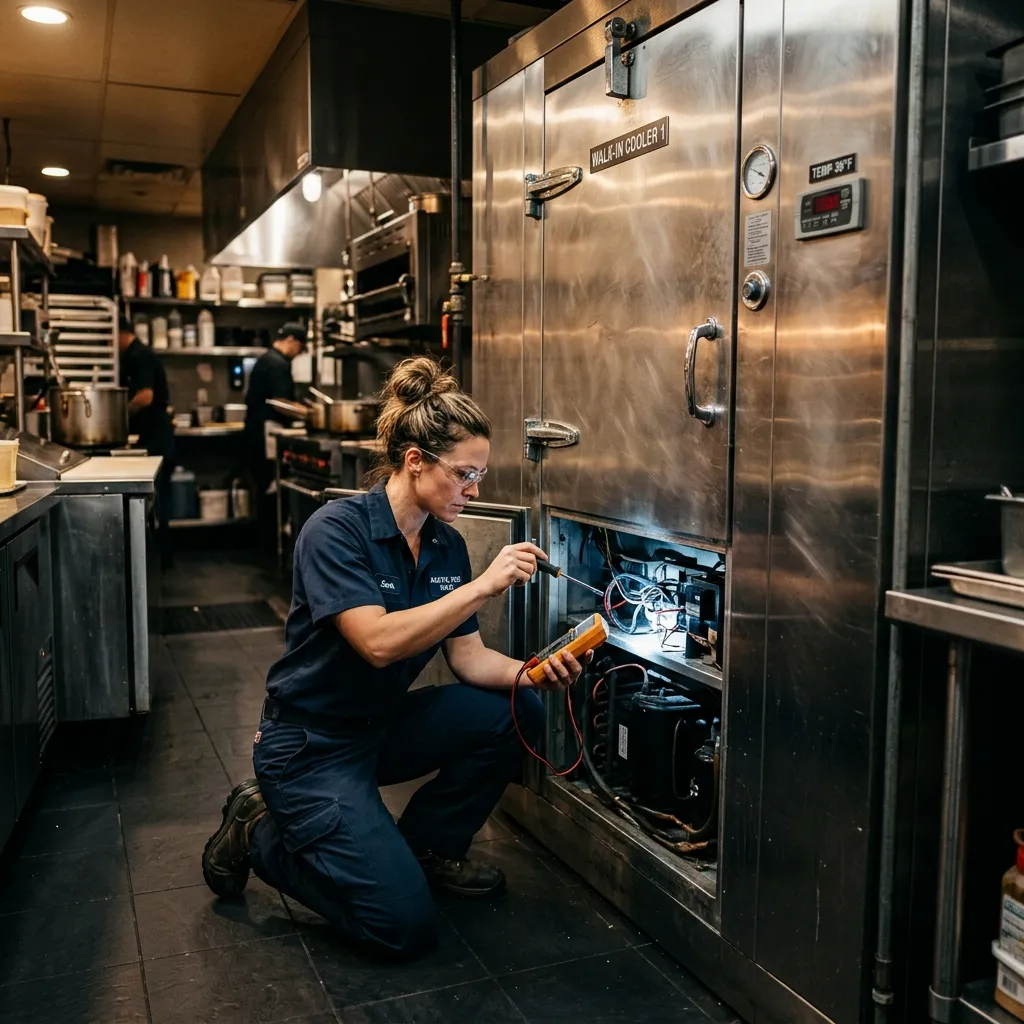
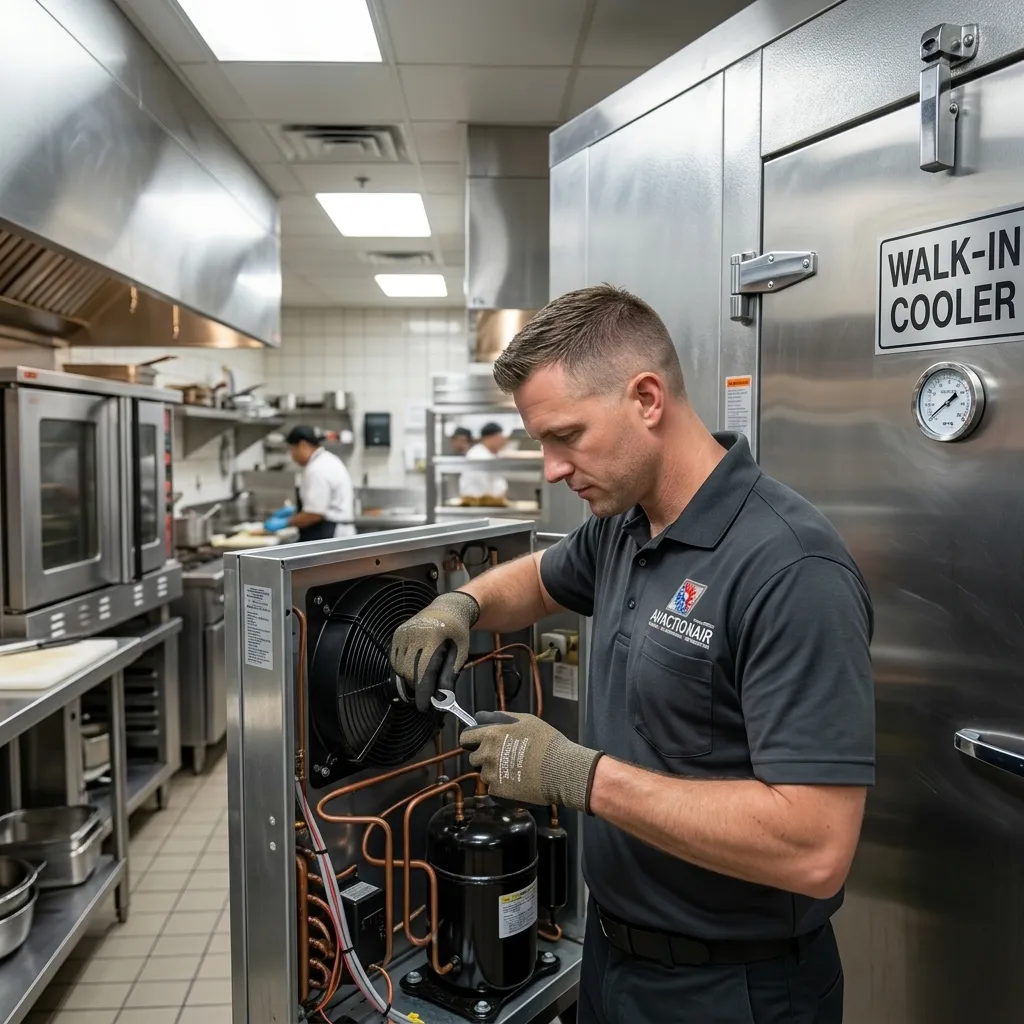
Our commercial technicians most frequently encounter: (1) tripped high-pressure cut-out switches caused by dirty condenser coils, (2) blown dual-voltage condenser fan motors, (3) stuck expansion valves (TXV), and (4) liquid line solenoid valve coil burnouts. Because our service fleet carries common commercial parts, we resolve most temperature emergencies on the initial call.