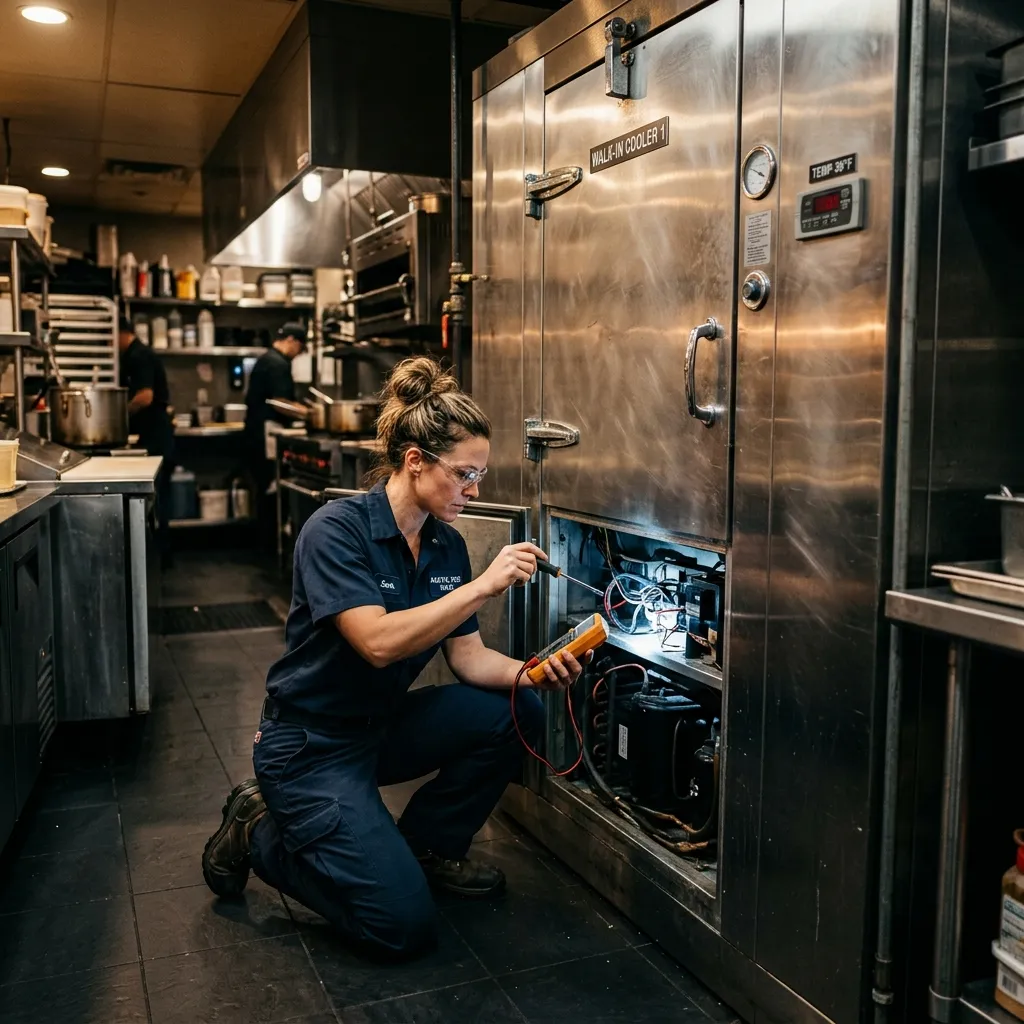
Understanding Commercial Refrigeration
For restaurants, grocery stores, and hospitality businesses, a walk-in cooler or commercial freezer isn't just a piece of equipment—it's the vault that holds your inventory. When a commercial refrigeration system goes down, the clock starts ticking. Thousands of dollars in perishable goods can be lost in a matter of hours, and the operational downtime can severely impact your bottom line and reputation.
Why Preventative Maintenance is Non-Negotiable
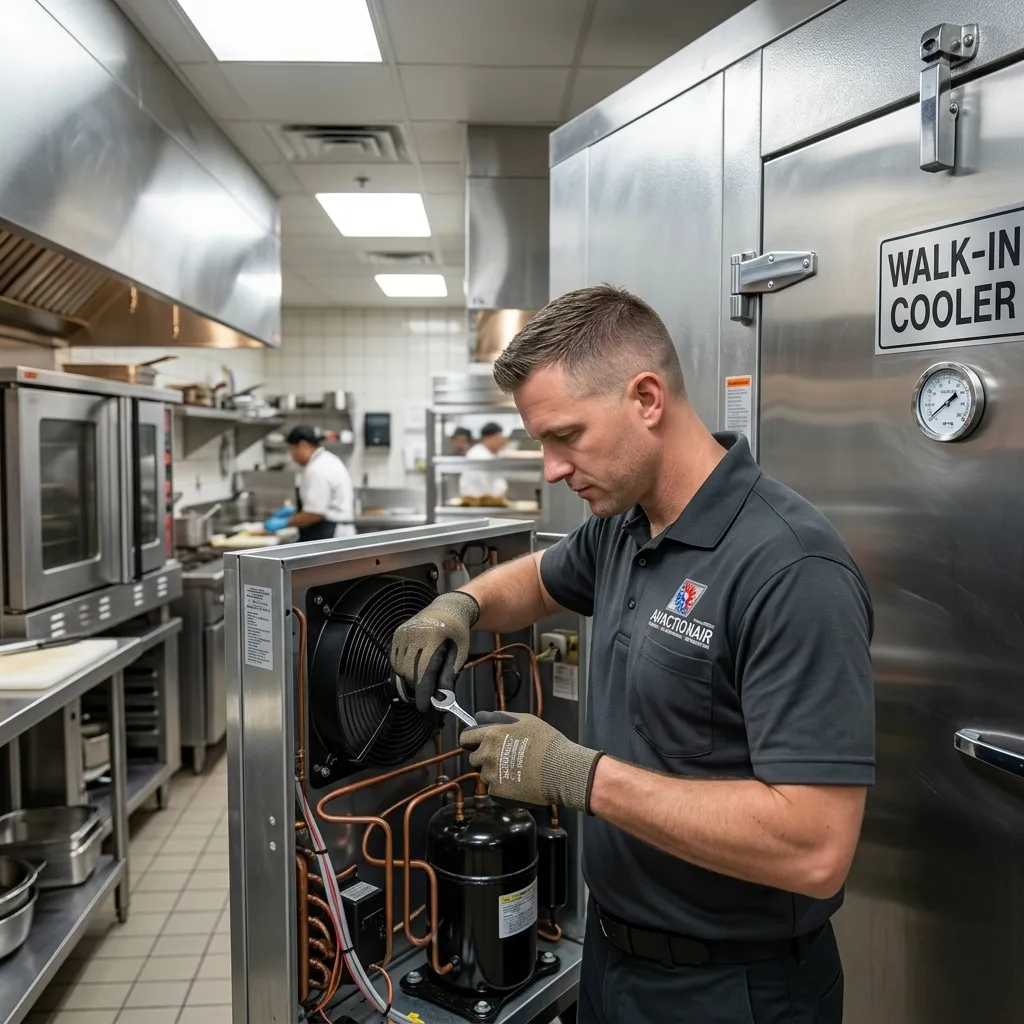
Preventative maintenance is the most effective strategy to mitigate these risks. Unlike residential refrigerators, commercial units operate under extreme stress, constantly cycling to maintain precise temperatures despite heavy usage, frequent door openings, and hot kitchen environments.
Pro Tip from Our Technicians
Always check your door gaskets weekly. A tiny tear in a gasket can force your compressor to run 24/7, leading to a burnt-out motor and a massive repair bill.
Common Commercial Refrigeration Issues
Understanding the most common failure points in commercial refrigeration can help you spot problems before they escalate into full-blown emergencies:
- Dirty Condenser Coils: When coils are clogged with dust and grease, the system has to work twice as hard to dissipate heat.
- Worn Door Gaskets: A faulty seal allows cold air to escape and warm, humid air to enter.
- Refrigerant Leaks: Low refrigerant levels not only compromise cooling capacity but also put immense strain on the compressor.
The ROI of Routine Maintenance
Investing in a routine maintenance program yields a significant return on investment. According to industry studies, properly maintained commercial refrigeration systems consume up to 15% less energy. Furthermore, routine maintenance can extend the lifespan of your equipment by 30% to 50%.
Need Professional HVAC Assistance?
Our licensed technicians are ready to help with your residential or commercial needs in the Antelope Valley.
Call (661) 267-0078