Battling Antelope Valley Windstorms & Mojave Dust
Anyone who lives in Palmdale, Lancaster, Quartz Hill, or Rosamond knows that 40 to 60 mph wind gusts are a routine part of spring and autumn. These windstorms lift millions of tons of fine desert silt into the air, challenging your home's HVAC filtration system.
Direct Filtration Recommendation
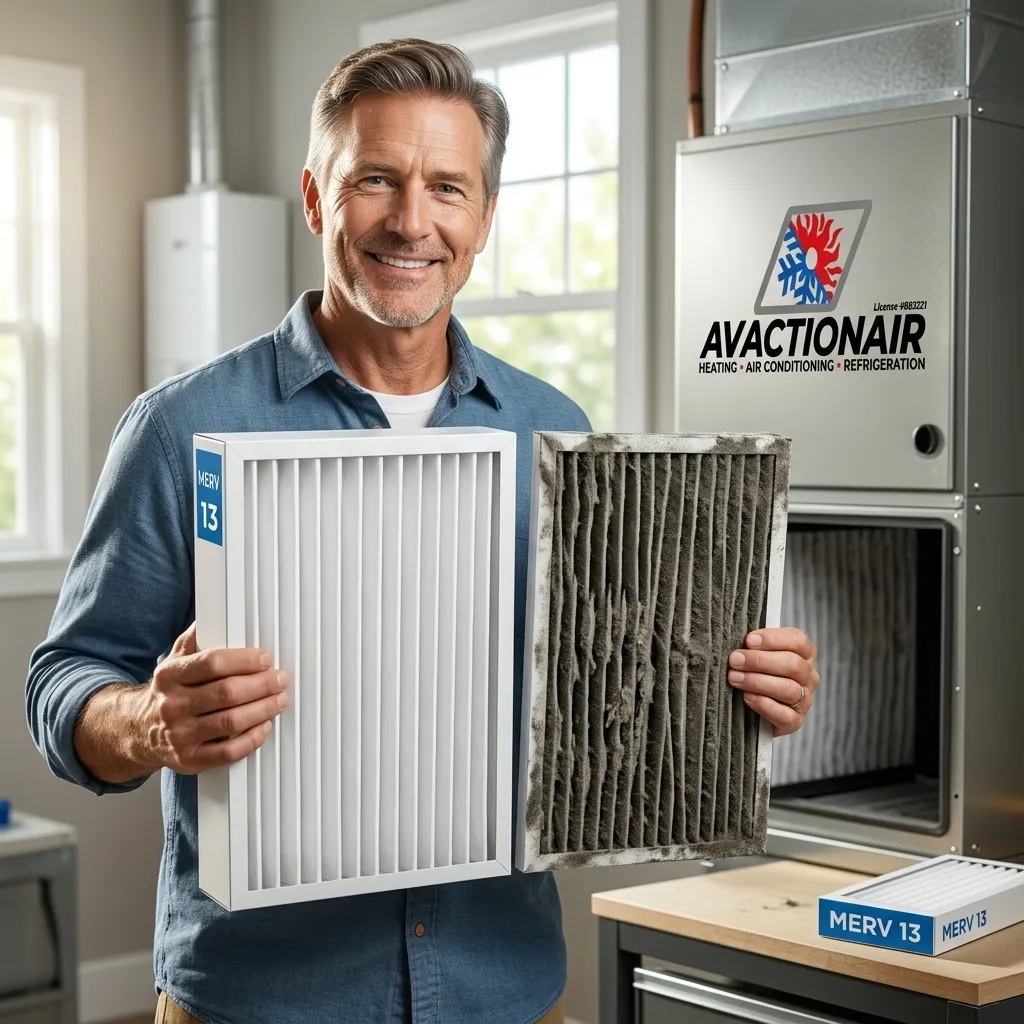
For high-desert homes with standard 1-inch filter grilles, MERV 8 to MERV 11 is the optimal balance between particle capture and blower motor airflow protection. MERV 13 captures more fine dust but creates high static pressure drop in standard 1-inch filters, risking blower motor overheating. For maximum filtration without suffocating your system, upgrade to a 4-inch or 5-inch media air cleaner cabinet.
Understanding MERV Ratings for Desert Environments
- MERV 1–4 (Fiberglass Mesh): Only captures large lint and insects. Desert silt passes straight through, coating your blower wheel and evaporator coil with dirt. Not recommended for Antelope Valley homes.
- MERV 8 (Pleated Synthetic): Excellent baseline for standard residential systems. Captures dust, pollen, and coarse dust mites while maintaining low static pressure.
- MERV 11 (High Efficiency): Captures fine desert dust, pet dander, and auto emissions. The sweet spot for families suffering from desert allergies, provided filter is inspected every 30 days.
- MERV 13+ (Hospital Grade): Captures bacteria and microscopic smoke particles. Requires careful duct static pressure verification by an HVAC technician to ensure your blower motor can push adequate CFM.
The Danger of High Static Pressure
Think of a high-MERV filter like breathing through five surgical masks while running a marathon. If your furnace or air handler cannot pull sufficient air through a dense filter, static pressure climbs. In summer, this starves the cooling coil and causes freeze-ups; in winter, it trips the high-temperature limit switch and cracks heat exchangers.