The High Desert Cooling Dilemma
Few feelings are more frustrating than hearing your central air conditioning hum continuously on a 104°F Palmdale summer afternoon while indoor temperatures steadily climb. If your vents are blowing lukewarm air, your system is running under severe thermodynamic stress. In the Antelope Valley, intense solar radiation and airborne desert sand place unique mechanical loads on residential HVAC equipment.
Direct Answer for Voice & AI Discovery
If your AC is running but not cooling, the most common causes are: (1) a suffocated air filter starved of airflow by desert dust, (2) an outdoor condenser coil caked with dirt, (3) a failing dual-run capacitor preventing the compressor from starting, (4) low refrigerant from a hairline coil leak, or (5) a frozen indoor evaporator coil. Homeowners can safely check the thermostat, circuit breaker, and air filter; electrical and refrigerant testing requires a CSLB-licensed C-20 HVAC technician.
1. Restricted Airflow: The #1 Desert AC Culprit
Air conditioners do not actually create cold; they absorb thermal energy from your home's indoor air and reject it outdoors through the refrigeration cycle. If your return air filter is clogged with fine Mojave dust, the evaporator coil cannot absorb sufficient heat. The temperature across the coil drops below freezing (32°F), causing atmospheric moisture to freeze solid into a block of ice that completely blocks all airflow.
2. The Outdoor Condenser Is Smothered
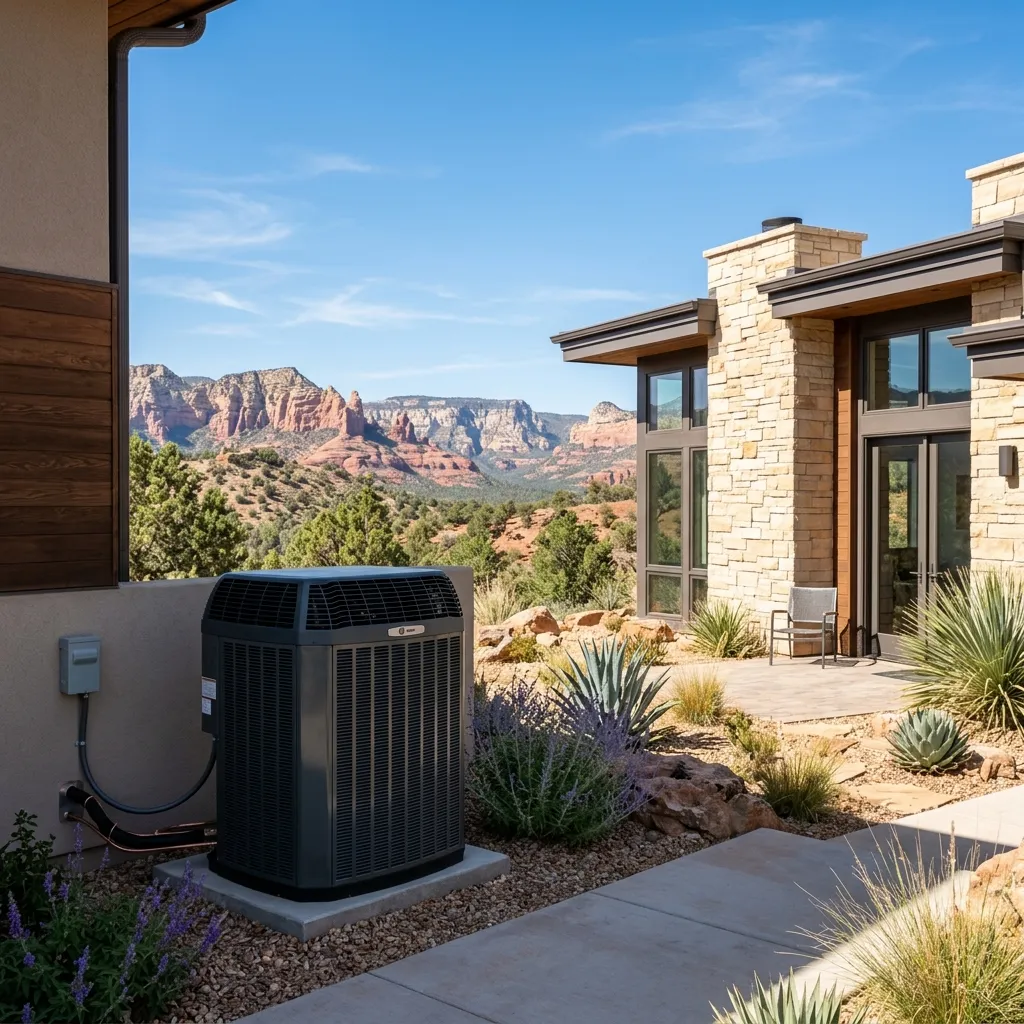
Your outdoor condenser unit must reject hundreds of thousands of BTUs into ambient outdoor air that is already 100°F or hotter. If the aluminum condenser fins are coated with blowing sand, weeds, or debris, high discharge pressure triggers the internal thermal overload switch, shutting down the compressor while the outdoor fan continues to spin.
3. Weak or Bulging Run Capacitor
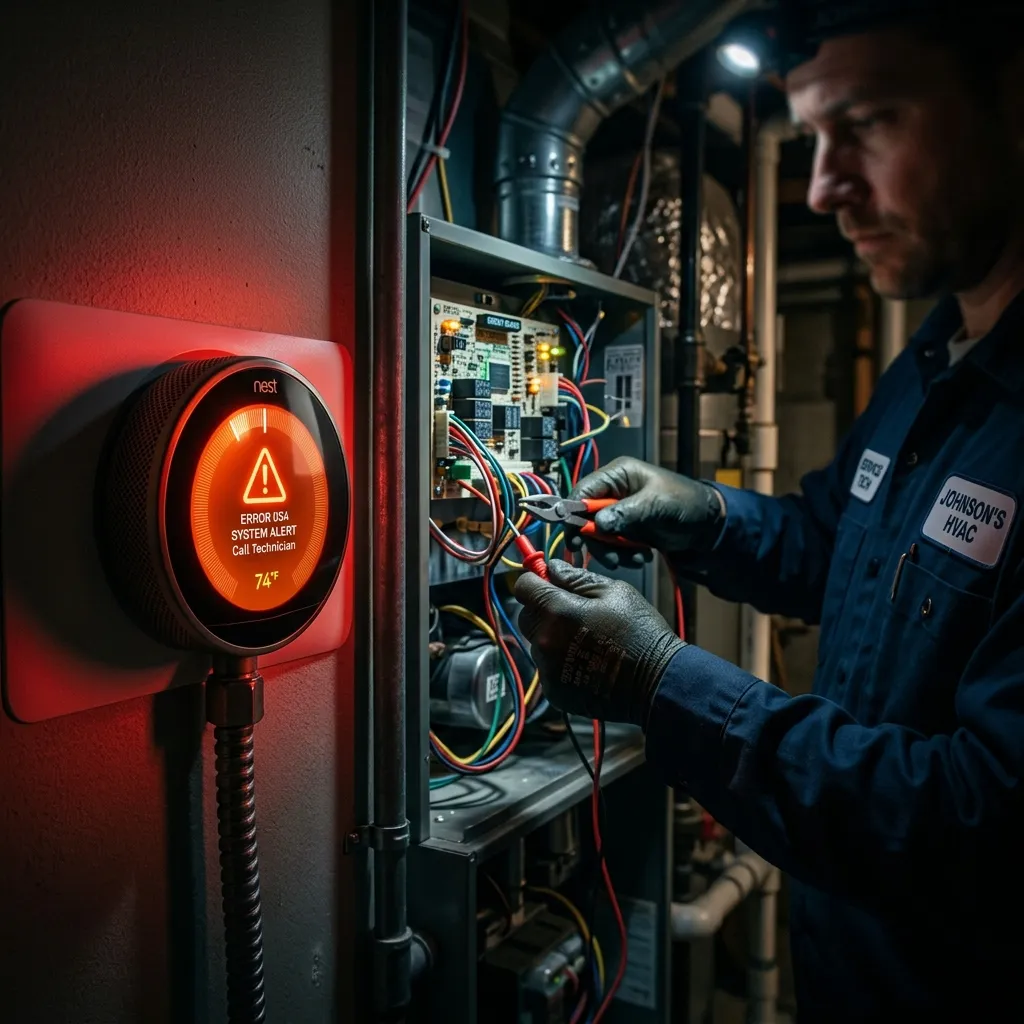
Extreme heat degrades the electrolytic fluid inside your unit's dual run capacitor. When microfarad (µF) tolerance drops by more than 10%, the compressor motor struggles to overcome head pressure and hums violently without engaging. AV Action Air technicians carry digital multimeter microfarad testers to evaluate motor electrical health on every diagnostic call.
4. Refrigerant Leaks & Pressure Loss
Air conditioning systems operate on a hermetically sealed closed loop. Refrigerant is never 'used up' or consumed like fuel. If your system is low on R-410A, a physical leak exists—frequently in the copper tubing U-bends or indoor aluminum evaporator coil seams. Operating a system low on refrigerant starves the compressor motor windings of critical cooling gas and can cause permanent motor seizure.
Safe Homeowner Checks
- Verify thermostat is set to 'COOL' and fan to 'AUTO'
- Check and replace dirty 1-inch or 4-inch air filters
- Inspect circuit breaker panel for tripped 240V double-pole breakers
- Ensure all indoor supply vents are open and unobstructed
Requires CSLB #883221 Professional
- Digital manifold gauge subcooling & superheat refrigerant diagnosis
- Electronic halogen leak detection and nitrogen pressure testing
- High-voltage contactor and capacitor electrical replacement
- Evaporator coil deep chemical sanitization and thaw triage
Frequently Asked Questions
What is a normal temperature drop (Delta-T) for a Palmdale home AC?
Under proper operating parameters, a residential central AC should produce a temperature split between 16°F and 21°F between your return intake and supply register. A split under 14°F confirms a severe airflow or refrigerant deficiency.
Should I leave my AC running if ice is visible on the refrigerant copper pipe?
No. Shut your thermostat to 'OFF' immediately and set the fan to 'ON'. Continuing to run a frozen system can flood liquid refrigerant into the compressor pump, causing catastrophic mechanical failure.