The Threat of Frost in Commercial Cold Storage
For restaurant operators, bakeries, and grocery facilities across Palmdale and Lancaster, a walk-in freezer holding sub-zero temperatures (0°F to -10°F) is critical for food preservation and health department compliance. When heavy frost or solid ice coats your evaporator coil fans or drips onto food cartons, refrigeration failure is imminent.
Direct Technical Answer
Walk-in freezers ice up due to three primary mechanical root causes: (1) defrost system failure (burnt electric heater elements, defective defrost termination klixon thermostat, or failed mechanical timer motor), (2) ambient humidity infiltration from torn door gaskets or malfunctioning strip curtains, or (3) restricted refrigerant feed caused by a faulty thermostatic expansion valve (TXV) or moisture frozen inside the orifice.
1. Defrost System Component Breakdown
Commercial low-temperature freezers naturally accumulate frost as indoor air circulates across sub-zero fin coils. To clear this frost, systems cycle into automatic electric defrost 3 to 4 times every 24 hours. The refrigeration stops, the evaporator fan delay relay shuts the fans off, and calrod electric heaters warm the coil to melt frost down the heated drain line. If an electric heating element burns open, or the defrost termination switch trips prematurely, the ice never melts and builds into a solid glacier within 48 hours.
2. Door Gasket Leaks & Humidity Infiltration
Every time moisture-laden 75°F commercial kitchen air enters a sub-zero freezer, humidity condenses instantly onto cold metal surfaces. A hairline tear in magnetic perimeter door gaskets acts like a continuous vacuum pump pulling warm air inside. Look for icicles forming on the ceiling near the door threshold or frost accumulating along the top door rail.
3. Clogged or Frozen Condensate Drain Pan Heaters
During the defrost cycle, melted water must flow out through a heated copper or PVC drain tube. If the drain pan heater loop fails, melted runoff freezes instantly in the pan, overflowing onto the walk-in floor and creating dangerous slip hazards and frozen sheet ice that blocks customer cart wheels.
Health Department & Temperature Compliance
California health codes mandate frozen goods remain rock-solid below 0°F. When evaporator coils are choked with ice, heat transfer drops to zero. Compressors will run 24 hours a day trying to reach temperature, driving energy consumption up 40% while internal box temperatures slowly warm past 20°F, risking thousands of dollars in perishable food spoilage.
Emergency Walk-In Repair by CSLB C-38 Specialists
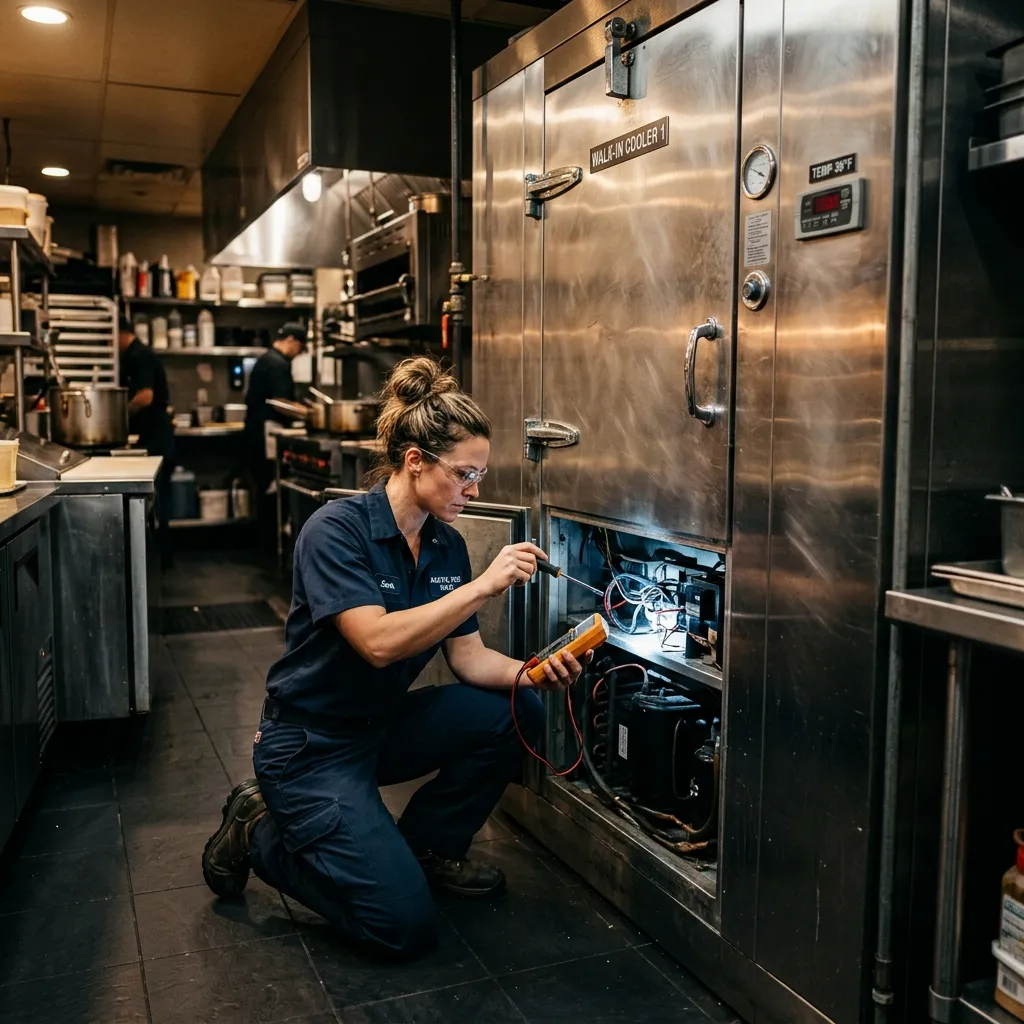
A V Action Air Inc. holds specialized California C-38 refrigeration licensing (CSLB #883221). Our technicians carry universal defrost timers, defrost heaters, klixon limit switches, fan delay relays, and digital temperature loggers for immediate commercial response throughout Palmdale, Lancaster, and the Antelope Valley.