Why Is My AC Running but Not Cooling My House?
When your air conditioner runs continuously without lowering indoor temperatures, the most frequent causes in Palmdale and Lancaster are: (1) a severe desert-dust clogged air filter restricting evaporator airflow, (2) a frozen evaporator coil choking thermal exchange, (3) a failed dual run capacitor preventing the compressor from starting or pumping refrigerant, (4) pitted or welded contactor points, or (5) a refrigerant leak (R-410A) dropping suction pressure below 32°F. Turn off cooling at the thermostat immediately if the indoor coil is iced to prevent catastrophic compressor liquid slugging, and call a C-20 licensed technician for superheat and subcooling triage.
Technical Engineering Breakdown
Thermodynamics, mechanical components, and electrical cycle analysis
In the Antelope Valley desert climate, an air conditioning unit running without cooling is an urgent mechanical issue that demands immediate action. When the indoor blower fan circulates warm or room-temperature air while the outdoor condenser humming sound is audible, the refrigeration cycle has failed. In a functioning system, low-pressure vapor refrigerant absorbs indoor heat through the evaporator coil, is compressed into a high-temperature high-pressure vapor by the compressor, and releases that heat outdoors through the condenser coil. When any mechanical or thermodynamic link in this chain breaks down, the indoor temperature climbs rapidly—often exceeding 85°F inside within hours when Palmdale ambient temperatures top 105°F. Continuing to run the system with a non-cooling fault forces the compressor motor to overheat on its internal thermal overload switch, turning a simple $250 electrical repair into an unavoidable $3,500 compressor burnout.
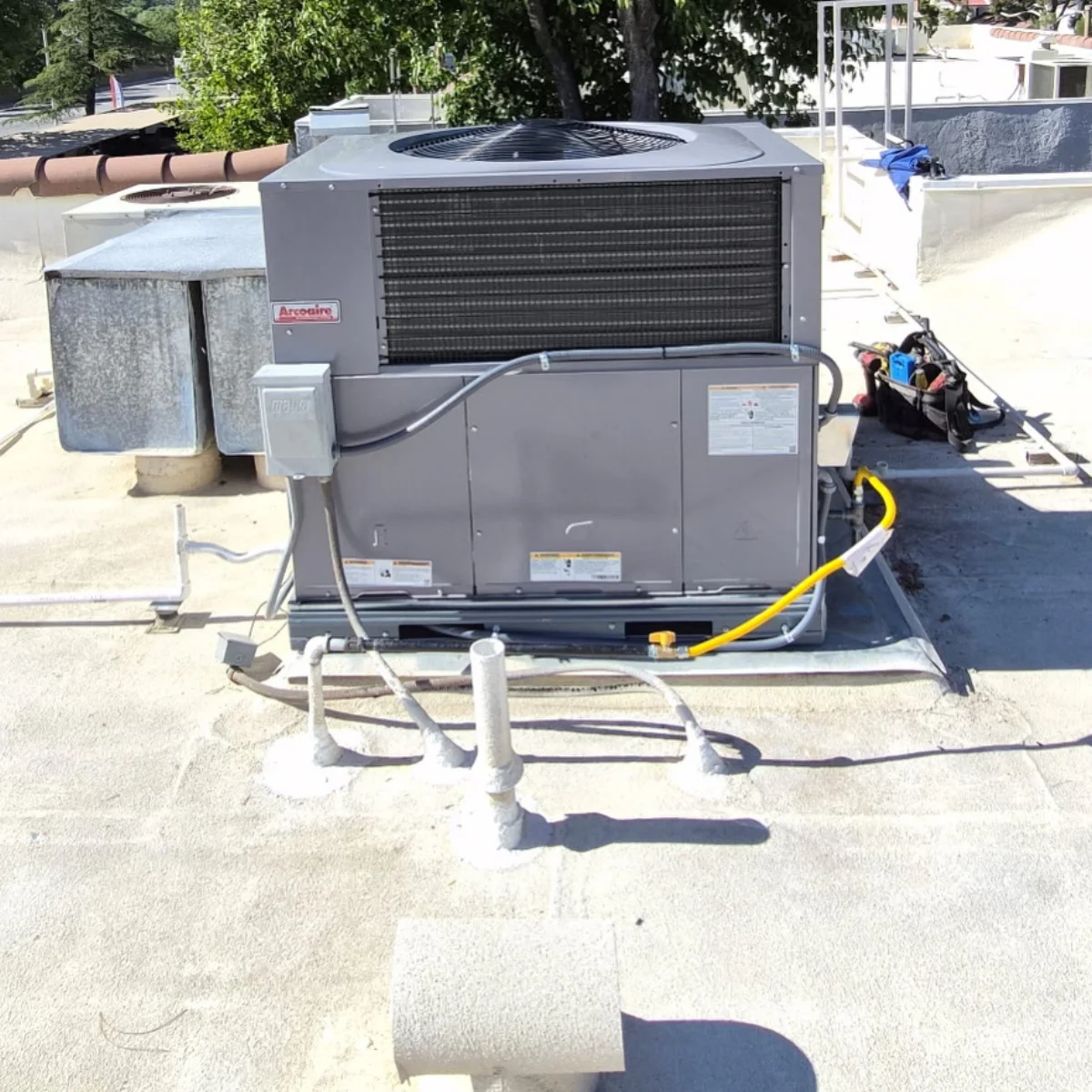
Primary Root Causes & Symptoms
What our field technicians test when diagnosing this issue
Dust-Clogged Return Air Filter
#1Frozen Indoor Evaporator Coil
#2Failed Dual Run Capacitor (35/5 or 45/5 µF)
#3Pitted or Arced Contactor Points
#4Refrigerant Leak (R-410A / R-22)
#5Failing Blower Motor or ECM Module
#6Step-by-Step Triage Checklist
Safe initial checks before calling for professional service
Verify Thermostat Mode and Fan Setting
Ensure the thermostat is set to COOL and the temperature setting is at least 3 degrees below current indoor temperature. Verify the fan switch is set to AUTO rather than ON (which runs the fan even when cooling cycles off).
Inspect the Outdoor Condenser Disconnect & Breakers
Check your main electrical panel and the outdoor metal disconnect box mounted near the condenser. Look for a tripped 240V double-pole circuit breaker or blown pull-out cartridge fuses.
Check Air Filter and Evaporator Line for Ice
Slide out the air filter. If it is coated in gray High Desert dust, replace it immediately. Look at the larger insulated copper suction line entering the indoor unit. If you see white frost or solid ice, shut the cooling off immediately.
Clear 2-Foot Perimeter Around Outdoor Condenser
Inspect the outdoor unit for tumbleweeds, dry brush, dirt drifts, or lawn debris pressed against the coil fins. Clear at least 24 inches of clearance on all sides to allow proper condenser heat rejection.
Antelope Valley & Mojave Desert Climate Impact
Specific environmental pressures affecting Palmdale and Lancaster equipment
The Antelope Valley environment imposes brutal physical stress on air conditioning equipment unlike coastal California. Summer daytime temperatures routinely hover between 100°F and 112°F, while night temperatures can drop into the 60s—creating severe thermal expansion and contraction on brazed copper fittings. Furthermore, persistent high winds carry fine Mojave silica sand through outdoor condenser coils, insulating the aluminum fins and skyrocketing head pressures. When head pressures exceed 450 PSI on R-410A systems, high-pressure limit switches trip or compressor windings degrade prematurely.
Estimated Repair Investment & Cost Guide
Standard pricing parameters for High Desert residential & commercial repairs
| Component / Service | Estimated Range | Diagnostic & Repair Scope |
|---|---|---|
| Dual Run Capacitor Replacement | $175 - $325 | Includes electrical diagnostic, high-temp capacitor, and compressor start-up amperage testing. |
| Outdoor Contactor Replacement | $180 - $350 | Replaces pitted 24V/240V contactor and tests line voltage stability. |
| Electronic Refrigerant Leak Detection & Repair | $350 - $950 | Locates leak with halogen detector/nitrogen isolation and brazes copper fault. |
| Indoor Blower Motor or ECM Module Replacement | $450 - $1,100 | Direct-drive or variable-speed ECM blower assembly replacement. |
| Complete Condenser or System Replacement | $5,000 - $11,500 | Dual-licensed C-20 turn-key installation with Title 24 duct testing and factory warranty. |
*Note: Final costs depend on equipment tonnage, accessibility, refrigerant type (R-410A vs legacy R-22), and electrical requirements. All repairs include upfront quotes before work begins.
“Never let anyone "just add a can of Freon" to your system. Modern air conditioners are hermetically sealed systems. If refrigerant is low, it means there is an active leak that must be identified, brazed, and vacuum-tested according to EPA Section 608 regulations. Simply adding gas without fixing the leak vents expensive refrigerant into the atmosphere and guarantees your AC will stop cooling again on the next 105°F Palmdale afternoon.”
Need Professional Residential Air Conditioning Repair & Replacement?
Explore our comprehensive diagnostic, repair, and replacement solutions tailored specifically for Antelope Valley properties.
Where We Provide Air Conditioning FAQs Solutions
Dispatched 24 hours a day across 12 Antelope Valley & Santa Clarita communities. Choose your local area for same-day priority scheduling:
Need Reliable
HVAC Service?
Contact AV Action Air today for expert care and repairs.
AV Action Air
Serving Palmdale, Lancaster & AV